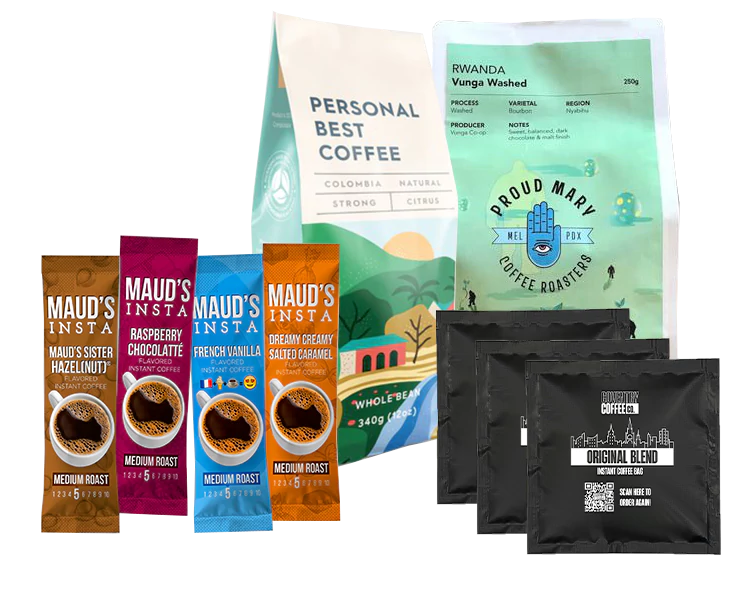
Custom coffee packaging durability and barrier tests measure whether a package can protect roasted coffee from oxygen, moisture, pressure, and physical damage. Common evaluations include oxygen transmission rate (OTR), water vapor transmission rate (WVTR), seal strength, puncture resistance, and drop testing. For specialty coffee, many manufacturers target an OTR below 1 cc/m²/day and WVTR below 1 g/m²/day to maintain freshness during storage periods of 6–12 months.
Coffee packaging performance depends on both material selection and finished package quality. A film may show excellent laboratory results, but the final pouch can still fail if seals are weak or the structure is damaged during transportation. Testing finished packages provides measurable information about how the product will perform from filling to consumer use.
Oxygen exposure is one of the main factors affecting roasted coffee quality. After roasting, coffee releases carbon dioxide and contains volatile aroma compounds that react with oxygen over time. Research published in 2018 showed that higher oxygen levels inside packages accelerated aroma loss and oxidation changes compared with low-oxygen storage conditions.
The oxygen transmission rate (OTR) test measures how much oxygen passes through packaging materials. Laboratories commonly follow ASTM D3985 standards, placing packaging films between oxygen-rich and oxygen-free chambers and measuring oxygen movement over time.
| Test item | Standard method | Common range for coffee packaging |
|---|---|---|
| Oxygen Transmission Rate | ASTM D3985 | Below 1 cc/m²/day for premium products |
| Water Vapor Transmission Rate | ASTM F1249 | Below 1 g/m²/day |
| Heat seal strength | ASTM F88 | Around 10–30 N/15 mm depending on design |
| Film thickness | ASTM D374 | About 80–150 μm for multilayer structures |
The results from oxygen testing are closely related to moisture protection because coffee quality changes when water enters the package. Moisture can affect aroma release, grinding behavior, and storage stability. Roasted coffee generally performs best when moisture content remains around 2–5%.
Water vapor transmission rate (WVTR) testing evaluates how much humidity can pass through packaging. The test is often performed under controlled conditions such as 38°C temperature and 90% relative humidity to simulate demanding storage environments.
“A coffee package with low oxygen permeability but poor moisture resistance may still lose product quality during long storage.”
Material structures are selected based on these measurements. Traditional high-barrier designs often use PET/aluminum foil/PE laminates because aluminum provides strong oxygen and moisture resistance. Newer recyclable structures use polyethylene-based films with barrier coatings, although matching aluminum-level performance remains difficult.
Mechanical durability testing evaluates whether packaging can survive filling, transportation, and handling. Coffee bags experience pressure from stacking, vibration during shipping, and impacts during distribution.
Drop testing is commonly used to evaluate finished packages. Samples filled with coffee are dropped from controlled heights, often 0.8–1.2 meters, and checked for broken seals, leakage, or deformation. A 2021 packaging study using 100 flexible packages found that most failures occurred at seal areas rather than through the main film layer.
Puncture resistance testing measures how much force is required to damage the package surface. This is important for whole bean coffee because roasted beans can create internal pressure points against the bag wall.
Tensile strength and elongation tests measure how packaging materials respond to stretching forces. Flexible coffee pouches usually require enough strength to resist tearing while maintaining easy opening performance.
Seal quality has a strong influence on package reliability because sealing areas are often weaker than the film itself. Heat sealing parameters, including temperature, pressure, and sealing time, must be controlled during production.
| Failure type | Possible reason | Testing method |
|---|---|---|
| Oxygen leakage | Weak seal or damaged film | Leak test |
| Moisture entry | Low barrier performance | WVTR test |
| Package opening failure | Poor seal balance | Seal strength test |
| Bag damage during shipping | Low mechanical resistance | Drop test |
Roasted coffee releases carbon dioxide after roasting, which creates another packaging requirement. Without proper gas management, internal pressure may increase and damage the package. This is why many coffee bags use a one-way valve system.
A common solution is a degassing valve coffee packaging design that allows carbon dioxide to escape while limiting oxygen entry. Valve performance is usually checked by measuring opening pressure, gas release speed, and oxygen leakage after valve installation.
Storage testing provides additional information about long-term performance. Instead of waiting for a full shelf-life period, manufacturers often use accelerated conditions to compare packaging options faster. Samples may be stored at temperatures such as 30°C or 40°C with controlled humidity.
The Arrhenius approach is frequently applied to estimate how temperature affects oxidation rates. For example, increasing storage temperature by 10°C can significantly accelerate some chemical reactions affecting coffee freshness.
During storage evaluation, manufacturers usually measure several indicators:
-
Oxygen concentration inside the package
-
Coffee moisture content
-
Aroma compound changes
-
Carbon dioxide release
-
Sensory quality scores
Sensory evaluation connects laboratory measurements with consumer perception. Trained panels often compare coffee stored in different packaging systems by checking aroma intensity, flavor balance, freshness, and aftertaste.
A study involving 30 trained sensory participants found that coffee stored in high-barrier packaging maintained higher aroma scores after several months compared with standard low-barrier bags. Sensory results are often combined with chemical measurements to evaluate packaging effectiveness.
Packaging durability also depends on transportation conditions. International coffee distribution may involve temperature changes, vibration, and long storage periods. Packaging tests can include vibration simulation, compression testing, and repeated handling evaluations.
| Evaluation stage | Main purpose | Typical measurement |
|---|---|---|
| Material testing | Check film performance | OTR, WVTR, thickness |
| Prototype testing | Evaluate finished bags | Seal strength, leakage |
| Transport testing | Simulate shipping | Drop, vibration, compression |
| Storage testing | Measure shelf stability | Aroma, moisture, oxidation |
Food-contact safety must also be considered when testing customized coffee packaging. Printing inks, adhesives, coatings, and plastic layers should meet international food packaging requirements. Migration testing is performed to confirm that packaging components do not transfer unwanted substances into coffee.
Sustainability requirements have increased interest in recyclable packaging. Since 2020, many brands have explored mono-material PE and PP structures to replace mixed laminates. However, packaging suppliers must confirm that environmental improvements do not reduce barrier performance.
A suitable testing program depends on the coffee type, expected shelf life, and distribution environment. Fresh roasted specialty coffee sold within 3 months may require different specifications from products stored for 12 months in global markets.
“Reliable coffee packaging comes from measured performance, including barrier testing, mechanical testing, and real storage evaluation.”
By combining OTR, WVTR, seal testing, durability assessment, and storage analysis, manufacturers can select packaging structures that maintain coffee quality while meeting transportation and shelf-life requirements.